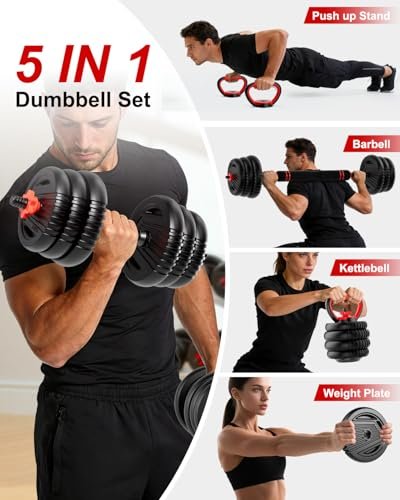
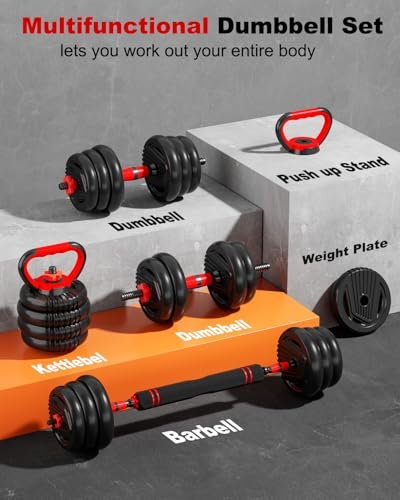
The 5-in-1 claim is the main reason buyers consider this set — and the main reason they hesitate. "Five configurations" sounds like marketing until you understand what each one physically is, what exercises it enables, and where it runs into real limits. Here's an honest breakdown.
Dumbbell Pair
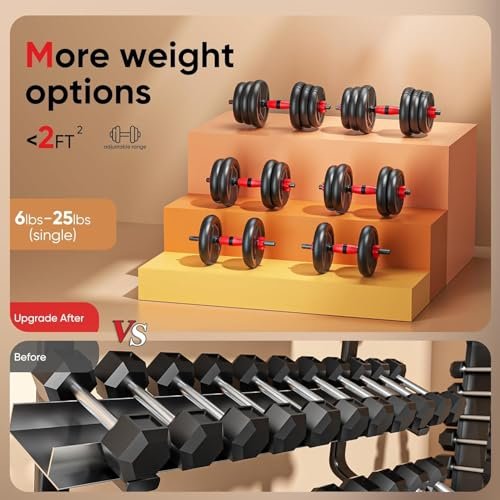
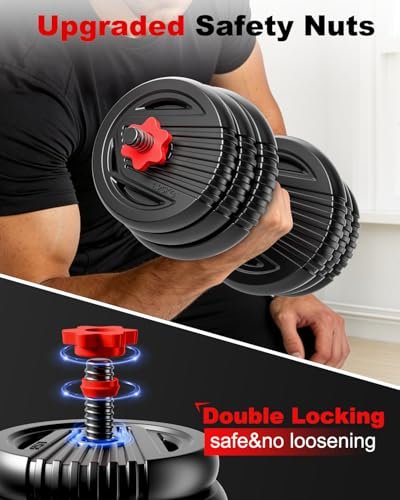
This is the default configuration: two independent handles, each loaded with plates and secured by the double-nut collars. Use them for anything you'd do with fixed-weight dumbbells — bicep curls, lateral raises, dumbbell rows, chest press on a bench, Romanian deadlifts, overhead press. The 90 lb set gives you 45 lbs per hand, which covers the full range of dumbbell exercises for most intermediate home gym users. Adjusting weight means unscrewing the outer collar, sliding plates on or off, and retightening — about 15 to 20 seconds per change.
The honest limitation: that adjustment time matters if you're doing supersets with no rest between exercises. Straight sets with normal rest periods? Barely noticeable.
Barbell Mode
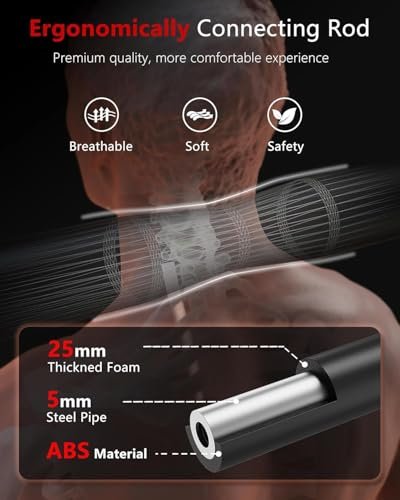
The connector rod links the two handles end-to-end, creating a single loaded barbell. The 5 mm steel tube core handles the structural load; the 20 mm foam wrapping sits across the back of your neck for squats or along your hands for bent-over rows. At 90 lbs total, you're working with a functional barbell for goblet squats, Romanian deadlifts, bent-over rows, and shoulder presses in a small space.
What it isn't: a 7-foot Olympic bar. The short length and plate geometry don't suit flat bench press with a full range of motion, and you won't be loading it to 200 lbs. For the compound barbell movements that work in an 8-foot living room, it does the job.
Two-Hand Kettlebell Grip
Hold one dumbbell handle horizontally with both hands — plates hanging below, grip centered. This creates a goblet squat implement, a two-hand swing weight, or a Romanian deadlift grip that mimics a kettlebell without buying a separate one. Goblet squats, two-hand swings, and sumo deadlifts all work cleanly in this configuration.
The limit here is size. The assembled dumbbell is bulkier than a cast-iron bell, especially at higher weights. Slow, controlled movements work well. Fast, ballistic swings with aggressive hip drive — the kind a 35 lb cast-iron bell handles with ease — feel awkward at higher weights because the plate geometry shifts the center of mass differently than a round bell.
Single-Hand Kettlebell Grip
Hold one handle by the end with the plates hanging below, using a neutral grip. This position suits single-arm swings, single-arm rows from the floor, and suitcase carries. It's not identical to a proper kettlebell handle shape — the ABS bar is straight, not curved — but for users who want kettlebell-style loading without a dedicated purchase, it covers the basics.
Best for: goblet variations, carries, and controlled single-arm work. Less suited to Turkish get-ups or cleans where a true kettlebell bell shape stabilizes the wrist naturally.
Push-Up Stand
Place both handles on the floor parallel to each other and grip them during push-ups. This reduces wrist extension compared to flat-palmed push-ups — a real benefit for anyone with wrist discomfort or limited wrist mobility. The ABS non-slip texture grips the floor reasonably well on carpet; on polished hardwood, putting a mat underneath is worth doing.
This is a straightforward, useful configuration. It's not a specialty item — it just works, and it's one less accessory to buy if wrist-friendly push-up grips were already on your list.